
Metricool recently released its YouTube Study 2026, analysing 799,718 videos from 71,177 accounts across different industries, niches and account sizes.
The headline numbers are impressive: views are growing significantly across both long-form videos and Shorts. But dig a little deeper and a more interesting story emerges. YouTube is getting better at putting content in front of people, while keeping their attention is becoming considerably harder.
For brands investing in video, that distinction matters.
More views don’t necessarily mean more attention
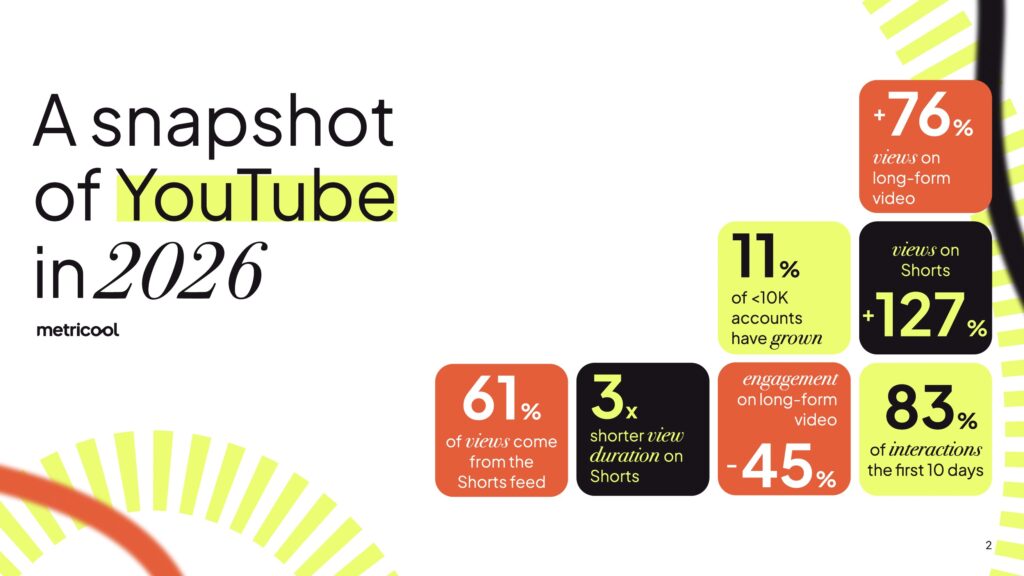
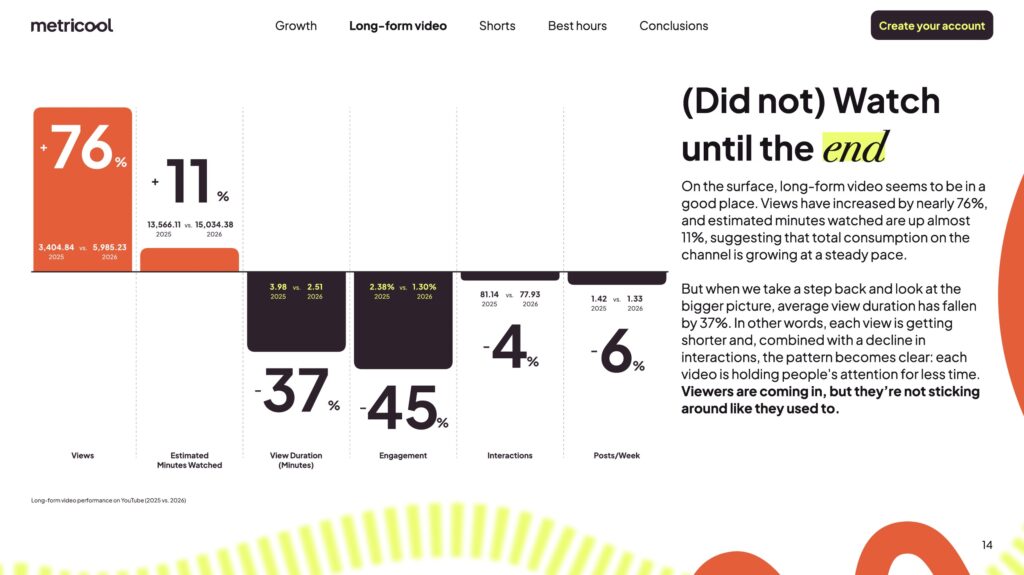
Long-form videos saw average views increase by 76% compared with the previous study, from 3,405 to 5,985 views per video. Yet during the same period, average view duration dropped 37%, engagement fell 45%, and interactions declined slightly by 4%.
In other words, more people are arriving, but they’re spending less time watching. A high view count might therefore look impressive on a performance report without necessarily indicating that the content successfully captured the audience’s attention.
For brands, this is an important reminder to look beyond reach. The opening, storytelling, pacing and relevance of the content matter just as much as distribution. Reach gets you onto the screen. Creativity keeps you there.
Shorts are booming, but attention is even shorter
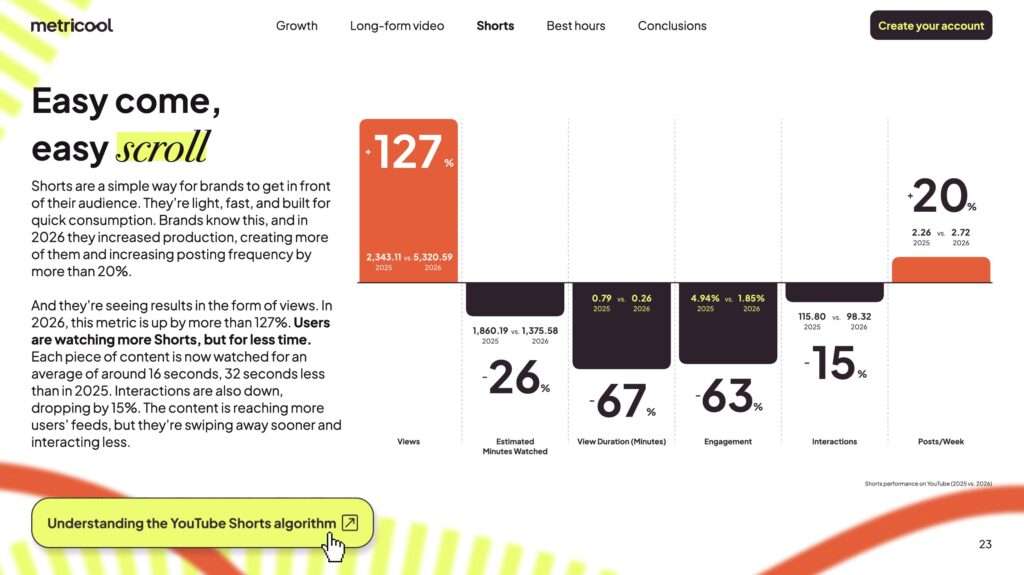
The contrast is even stronger with YouTube Shorts. Average views increased by 127%, from 2,343 to 5,321 per Short. At the same time, average view duration dropped from 0.79 minutes to just 0.26 minutes — around 16 seconds. Engagement also declined by 63%, while interactions fell by 15%.
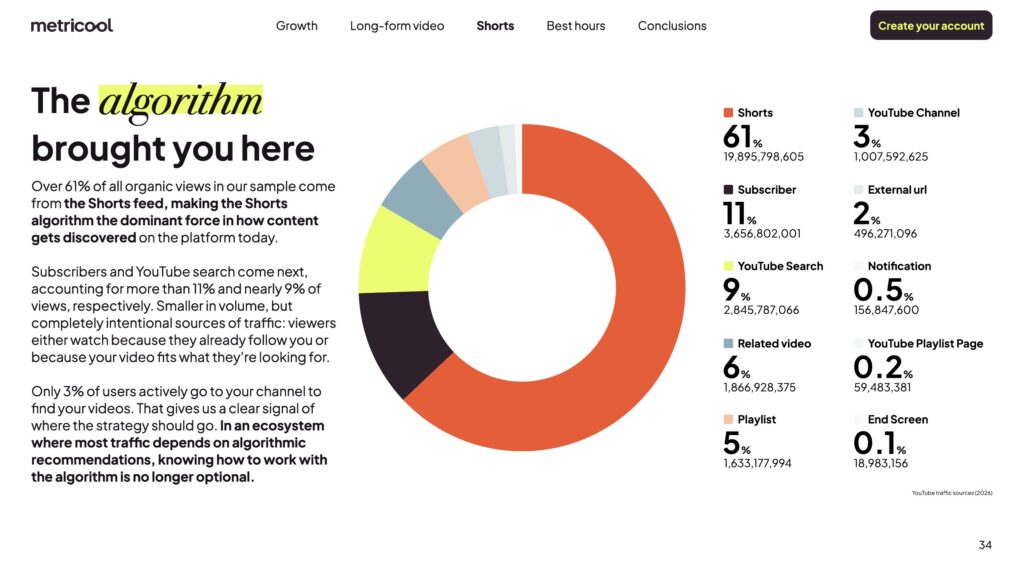
This doesn’t mean Shorts aren’t working. Quite the opposite: 61% of organic YouTube views now come from the Shorts feed, making it a major discovery engine on the platform. But discovery and attention are two very different things.
For brands, the creative challenge is therefore immediate. You have a very small window to establish the idea and give someone a reason not to swipe. A strong concept, first frame and pacing become essential when the audience can move to the next piece of content in a fraction of a second.
Shorts or long-form? Why not both?
One of the more interesting findings is that Shorts and long-form shouldn’t necessarily be treated as competing formats.
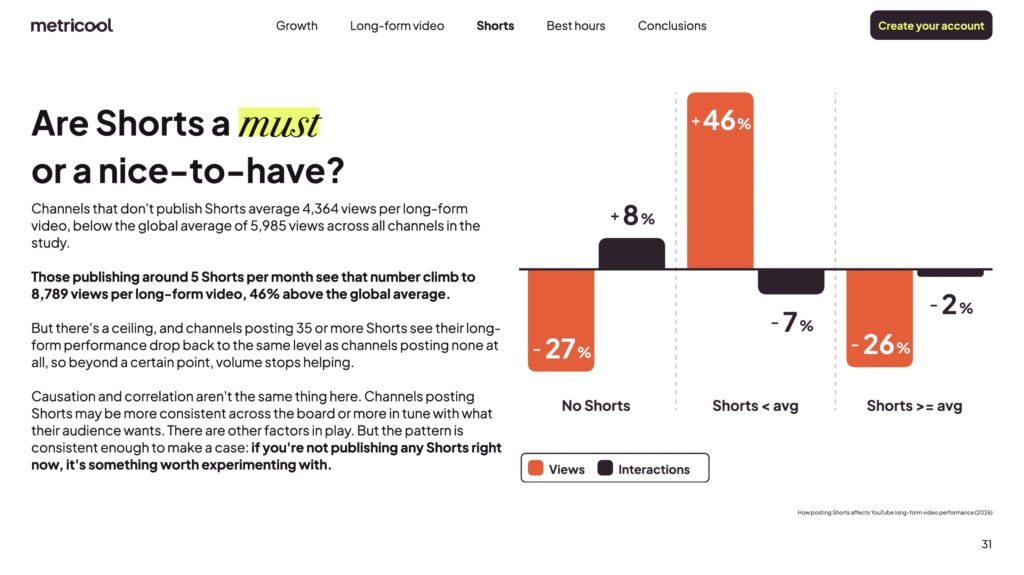
Channels publishing around five Shorts per month averaged 8,789 views on their long-form videos, compared with the study’s global average of 5,985. Metricool rightly points out that this is correlation rather than proof that Shorts directly cause better long-form performance, but the relationship is interesting.
It suggests a more useful way for brands to think about YouTube: Shorts for discovery, long-form for depth. A Short can introduce an audience to an idea, product or brand, while longer content provides the space to explain, educate or tell a richer story.
The objective shouldn’t be choosing one format over another, but understanding the role each plays within the wider content strategy.
YouTube content can work harder for longer
There’s another advantage that can easily be overlooked when comparing YouTube with other social platforms: content lifespan.
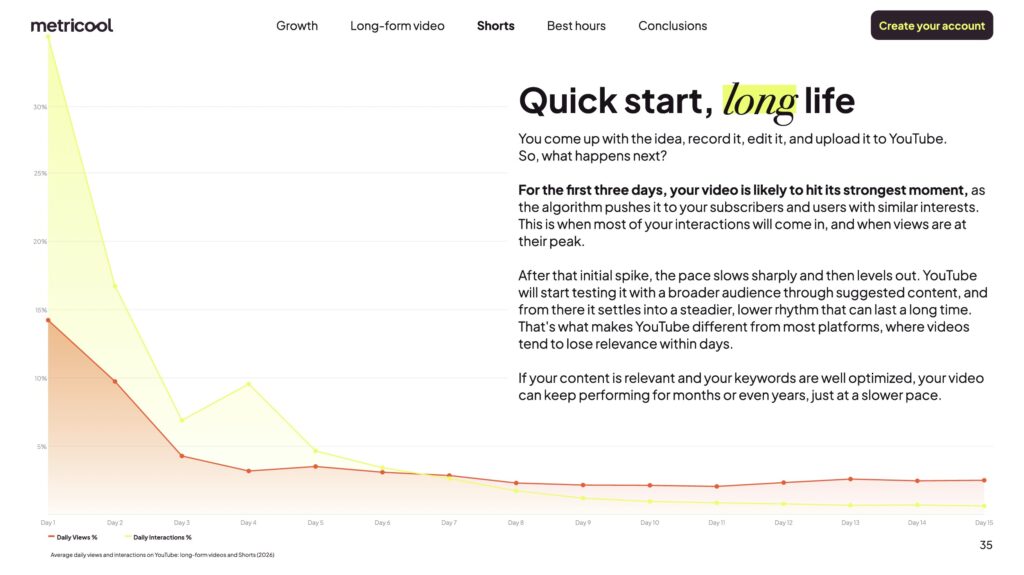
According to the study, a video’s strongest period is generally its first three days. After that initial push, views and interactions slow down, but they don’t necessarily stop. YouTube can continue recommending a relevant video through suggested content and search for months or even years.
That makes YouTube particularly interesting for evergreen brand content. An explainer, interview, tutorial, case study or product demonstration shouldn’t necessarily be considered another disposable item on the content calendar. Done well, it becomes a digital asset capable of continuing to create value long after publication.
What does this mean for brands?
The big takeaway from the report isn’t simply that brands should create more video.
YouTube already has the distribution mechanisms to put content in front of increasingly large audiences. Shorts, in particular, are opening significant opportunities for discovery beyond an existing subscriber base.
The harder part is what happens once someone sees it.
As views increase and attention becomes more fragmented, creative quality matters more, not less. Brands need stronger openings, clearer storytelling and content designed around what audiences actually want to watch rather than simply what the content calendar says needs to be published.
And perhaps that’s the most useful lesson from nearly 800,000 videos: more content doesn’t automatically create more attention. Better content has a much better chance.
Source: Metricool, YouTube Study 2026: Formats, Trends & Performance Data. The study analysed 799,718 videos from 71,177 YouTube accounts.